Saturday, May 28, 2011
10 Facts About Olive Oil
Olive oil is a fabulous ingredient with many uses, from medicinal purposes such as preventing heart disease and cancer to beauty benefits such as providing anti-aging properties, amongst the most popular form which is using in cooking and baking.
1. History
The olive tree is a crop native to Asia Minor that spread to Iran, Syria, Palestine and the rest of the Mediterranean basin around 6,000 years ago. It is among the oldest cultivated trees in the world and began growing long before the written language existed.
2. Family
The olive family, also known as the Oleaceae family, comprises of 600 species and which are situated on all continents.
3. The Olive Tree
There are many variations of olive trees which have many similarities and equally a lot of differences. Growing characteristic and appearance vary, as well as the size, taste and quality olives that they produce.
4. Harvesting
One of the most debated questions among growers is when to harvest. Harvesting can be done in many different ways, from hand-picking to completely mechanized harvesting.
Tuesday, May 24, 2011
10 Facts About Europe
Europe is a fascinating continent with a rich history and varied climate and culture. Thus it is no surprise that it is also an area rich with interesting facts. Here we will look at ten facts about Europe – there are many more where these come from and this is just a selection of the fascinating things there are to learn about Europe.
1. Europe is the second smallest continent in the world and consists of just 4 million square miles.
2. Europe unlike some continents is designated for political more than geographical reasons.
3. 700 million people live in Europe. However birth rates are relatively stagnant – and has one of the lowest fertility rates in the world.
4. However despite being low in fertility, Europeans are high in generosity and the ten most generous countries in terms of charities are all European. One of the more positive facts about Europe.
Top 10 Energy Sources that are Renewable
Energy is an inevitable requirement where we want development to take place. Many naturally occurring phenomenons contribute to producing this energy without damaging the environment. They are called renewable energy sources and they help to avoid pollution; both in urban and inaccessible locations on large and small scales. They form a sort of cycle without the deduction of any resource to generate the energy.
10. Tidal Power
The tidal power is not a very popular energy source, but has immense potential of becoming one in the near future. Tidal stream generators and barrage generation make use of tidal power. It is Eco-friendly and does not harm the environment at all. It follows the same principle as wind turbines, but instead of air, the generators rotate in water. Unlike wind and solar energy, tides can be predicted. Since time immemorial, tide mills have been driven directly from the relative motions of the Earth–Moon system and to a lesser extent from the Earth–Sun system. Lunar Energy, a British company was the first to establish a tidal farm in the coast of Pembrokshire in Wales, providing electricity to thousands of houses.
9. Wave Power
Predicting the direction of ocean and wave is a very difficult job, but is not impossible. Wave power is the transport of energy by ocean surface waves, and the capture of that energy for pumping or desalinating water and generating electricity. In Europe, wave farms have been introduced, using floating Pelamis Wave Energy converters. They use a floating buoyed device and generate energy through a snaking motion, or by mechanical movement from the wave’s peaks and troughs. Wave power is not the same as the diurnal flux of tidal power and the steady gyre of ocean currents, although it is confused to be so often. We have been pursuing this technology since 1890 and the world’s first commercial wave farm is based in Portugal, at the Aguçadora Wave Park, which consists of three 750 kilowatt Pelamis devices.
8. Solar Power
Producing electricity by making use of the sun’s energy and the photovoltaic (PV) cells is called the Solar Technology. Solar cells are becoming more efficient, transportable and even flexible, allowing for easy installation. Let it be a calculator powered by a single solar cell or off-grid homes powered by photovoltaic disarray; PV can power applications of all sizes. The 1973 oil crisis stimulated a rapid rise in the production of PV during the 1970s and early 1980s. Steadily falling oil prices during the early 1980s, however, led to a reduction in funding for photovoltaic R&D and a discontinuation of the tax credits associated with the Energy Tax Act of 1978. These factors moderated growth to approximately 15% per year from 1984 through 1996. Since the mid-1990s, leadership in the PV sector has shifted from the US to Japan and Germany.
Friday, May 13, 2011
The World's Biggest Gold Reserves
With the price of gold reaching an all-time high of over $1,050 per ounce, resourceINTELLIGENCE TV have taken the (not very novel) approach of looking at countries with the largest gold reserves
The question remains: which individual countries have the most gold?
Percentage of Reserves: 36.1%
Banco Central de Venezuela manages the 356.4 tonnes of gold in the country’s reserves, which amount to approximately $13.2 billion and represent 36.1% of Venezuela’s foreign reserves. Although Venezuela currently has the fifteenth largest reserve on the list, president Hugo Chavez announced in June 2009 that his government has introduced new policies to promote gold extraction and boost its ranking. His track record for efficiency, however, only excels in nationalizing projects.
Percentage of Reserves: 4.0%
Gold Reserve Value: $13.2 billion
The second most populous nation in the world has the fourteenth largest reserves on the World Gold Council’s. The Reserve Bank of India maintains the country’s 357.7 tonnes of gold, which are valued at $14.2 billion and comprise 4.0% of its foreign reserves. India’s current ranking may improve, however, as the government has asked the Geological Survey of India to mine the previously untapped gold reserves in many of its states.
Percentage of Reserves: 90.9%
Gold Reserve Value: $14.2 billion
The birthplace of the sweet fortified wine known as Porto is home to the thirteenth largest gold reserve in the world. At 382.5 tonnes , Portugal’s holdings are overseen by Banco de Portugal and are worth roughly $14.2 billion, accounting for 90.9 percent of the country’s foreign reserves.
Percentage of Reserves: 3.9%
Gold Reserve Value: $15.7 billion
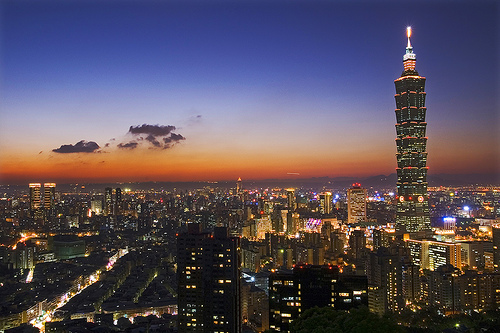
Renowned for its technology industry and robust economic growth, Taiwan also boasts the tallest building in the world (The Taipei 101 Tower) and the twelfth largest gold reserve in the world. The island nation’s foreign reserves have been reported at 423.6 tonnes. At today’s prices these holdings are worth $15.7 billion and comprise 3.9 percent of the country’s foreign reserves.
Sunday, May 8, 2011
Sex and coffee 'trigger stroke'
They all increase blood pressure which could result in blood vessels bursting, according to research published in the journal Stroke.
The Stroke Association said more research was needed to see if the triggers caused the rupture.
More than 150,000 people in the UK have a stroke each year with nearly 29,000 due to bleeding on the brain.
Bleeding can happen when a weakened blood vessel, known as a brain aneurysm, bursts. This can result in brain damage or death.
The researchers at the University Medical Center in Utrecht looked at 250 patients for three years to identify what triggers ruptures.
Caffeine danger They found that coffee was responsible for more than one in 10 burst brain aneurysms.
Read more... Read more!
Wednesday, January 12, 2011
How Much Sleep Do You Really Need?
Sleep is one of the richest topics in science today: why we need it, why it can be hard to get, and how that affects everything from our athletic performance to our income. Daniel Kripke, co-director of research at the Scripps Clinic Sleep Center in La Jolla, Calif., has looked at the most important question of all. In 2002, he compared death rates among more than 1 million American adults who, as part of a study on cancer prevention, reported their average nightly amount of sleep. To many, his results were surprising, but they've since been corroborated by similar studies in Europe and East Asia. Kripke explains.
Q: How much sleep is ideal?
A: Studies show that people who sleep between 6.5 hr. and 7.5 hr. a night, as they report, live the longest. And people who sleep 8 hr. or more, or less than 6.5 hr., they don't live quite as long. There is just as much risk associated with sleeping too long as with sleeping too short. The big surprise is that long sleep seems to start at 8 hr. Sleeping 8.5 hr. might really be a little worse than sleeping 5 hr.
Morbidity [or sickness] is also "U-shaped" in the sense that both very short sleep and very long sleep are associated with many illnesses—with depression, with obesity—and therefore with heart disease—and so forth. But the [ideal amount of sleep] for different health measures isn't all in the same place. Most of the low points are at 7 or 8 hr., but there are some at 6 hr. and even at 9 hr. I think diabetes is lowest in 7-hr. sleepers [for example]. But these measures aren't as clear as the mortality data.
Read more... Read more!
Why Do We Remember Bad Things?
You remember where you were on the morning of 9/11, but you have no recollection of what you had for lunch last Thursday. One of life's great mysteries is why certain experiences get lodged immovably in our memory, while others are forgotten. Fortunately, recent advances in neuroscience have helped spur major breakthroughs in scientists' understanding of the nature of memory. To explain, TIME asked Matt Wilson, a professor of neurobiology at MIT's Picower Institute for Learning and Memory.
Q: Why do we remember unpleasant events better than ordinary ones?
A: We think of memory as a record of our experience. But the idea is not just to store information; it's to store relevant information. [The idea is] to use our experience to guide future behavior.
There's been a lot of really interesting research that points to a connection between our memory of the past and our ability to imagine the future. In our studies of animal models of memory, where we're able to go in and actually watch the pattern of [a rat's] brain activity, we can see that the brain activity while the animal is in a behavior-based situation, [such as navigating a maze,] directly corresponds to its future behavior: what it can, may and will do in the future. We can see that the animal does in fact — I hesitate to use the word, but I'll use it anyway — "think." In terms of brain activity, anticipating the future and remembering the past seem to be related.
Read more... Read more!
Why Do Women Live Longer Than Men?
Across the industrialized world, women still live 5 to 10 years longer than men. Among people over 100 years old, 85% are women, according to Tom Perls, founder of the New England Centenarian Study at Boston University and creator of the website LivingTo100.com. Time.com asks him why.
Q: Why do women live longer than men?
A: One important reason is the big delay — and advantage — women have over men in terms of cardiovascular disease, like heart attack and stroke. Women develop these problems usually in their 70s and 80s, about 10 years later than men, who develop them in their 50s and 60s. For a long time, doctors thought the difference was due to estrogen. But studies have shown that this may not be the case, and now we know that giving estrogen to women post-menopause can actually be bad for them.
Read more... Read more!
Saturday, January 8, 2011
Why Are People Taller Today Than Yesterday?
Skeletons and written records show that human beings today are inches taller than humans just a century or two ago. And yet even today average heights vary among different nationalities, even among genetically homogenous populations, like the South Koreans and North Koreans. (South Koreans are taller.) John Komlos, professor of economics at the University of Munich and a pioneer in studying human well-being through history, explains what governs human height, and why some populations are taller than others.
Q: Why are people taller today than yesterday?
A: There are two main reasons. One is that the diet has improved considerably. In spite of some very negative aspects of the diet of industrialized populations, we have much better vitamin, mineral and protein intake than 100 or 200 years ago. As a consequence the body can grow much better.
Friday, December 10, 2010
Underwater nuclear cannons might launch the first lunar city on the moon
If you’re a lover of classic science-fiction movies, you’ve probably chuckled at the myriad ways in which Hollywood once believed space travel would be possible. Perhaps my favorite pre-Apollo rocketry solution is from the classic film When Worlds Collide, where a rocket is hurtled out of Earth’s orbit by sliding it down a huge ski jump on a big mountain.
But real-life beats even that for incredulity: a new rocketry concept is now exploring the idea of using huge underwater nuclear cannons to blast rockets to the moon. And it might just be plausible
Monday, November 29, 2010
How Can I Develop Effective Communication Skills?
How Can I Develop Effective Communication Skills? Effective communication skills are the key to improving your productivity and helping you advance your career. Not matter what your area of expertise is, being able to communicate with others will greatly perk up your chances for success. Even if you are naturally shy and prone to nervousness, there are some things you can do to help you achieve effective communication skills. Start by evaluating your personality and try to find areas where you excel and areas where you could use some improvement. Maybe you have effective communication skills when it comes to gestures and body language, but lack a strong voice. Or maybe your voice is fine but you tend to get nervous and fidget too much when you are in front of a group of people. Knowing what areas you need to work on will give you a chance to become better at effective communication with others around you
Which Are the Most Difficult Languages to Learn?
Which Are the Most Difficult Languages to Learn? There are over 2650 languages in the world plus over 7000 dialects. Deciding which language is the most difficult to learn may not be as simple as you may think. Different languages present different challenges, and what constitutes a difficult language depends a lot on the individual studying it. Your mother tongue is an important deciding factor when it comes to difficulty. For example, native speakers of Italian seem to learn Spanish and Portuguese rather easily despite the complex grammatical structures of the Spanish language. On the same basis, Chinese speakers will probably pick up Japanese faster than people whose first language uses the Roman alphabet. In fact, Chinese has no grammatical system per se, which makes it easier to learn than many Western languages once you have memorized the basic characters.
Friday, November 26, 2010
Why is Reading Important?
Prof. A.C. Grayling, in a review of ‘A History of Reading by Alberto Manguel’ that was published in Financial Times had said, "To read is to fly: it is to soar to a point of vantage which gives a view over wide terrains of history, human variety, ideas, shared experience and the fruits of many inquiries." So true! Reading is really like taking a flight to high altitudes in pursuit of information and knowledge. It is a journey in search of enlightenment.
Have you asked yourself the question, "Why is reading important?" What was the answer that you got? I am sure your heart must have answered in favor of reading. Reading is like providing the mind with nourishment. Knowledge is the food for the mind and soul. Apart from giving us the basic information about the world around us, it also provides us with the food for thought. It encourages us to think. It increases our hunger for knowledge and our thirst to learn more.
Thursday, March 25, 2010
Do People Only Use 10 Percent Of Their Brains?
What's the matter with only exploiting a portion of our gray matter?
By Robynne Boyd
The human brain is complex. Along with performing millions of mundane acts, it composes concertos, issues manifestos and comes up with elegant solutions to equations. It's the wellspring of all human feelings, behaviors, experiences as well as the repository of memory and self-awareness. So it's no surprise that the brain remains a mystery unto itself.
Read more... Read more!Saturday, February 27, 2010
The Iceman: Medical Knowledge We Never Dreamed of 5,200 Years Ago
Read more... Read more!The Iceman: Medical Knowledge We Never Dreamed of 5,200 Years Ago
Linsey Dyer and Rick Effland
The finding of the Iceman has brought new light from the Stone Age. On September 19, 1991, a body was discovered originating out of the melting ice of a glacier in a small mountain passage named Tiesenjoch. After the rescue team retrieved the body from the ice, they transported it to the Department of Forensic Medicine in Innsbruck. Where Archaeologist determined the body was a natural mummy. Professor Rainer Henn, Forensic expert, from the Department of Forensic Medicine at the University of Innsbruck said "In order for a body to be completely mummified as in this case, the body must first dry completely then covered in ice and snow." The mummy was an male adult remarkably well preserved. The condition of his equipment and organic material were also preserved in good condition. The age of the body is about 3,300 BC or late Stone Age. After a lot of argument the body was found to be on the Italian side by 300 feet and now resides in a museum there. Today he is known by many as "Ötzi" for the valley in which he was found, but we also know him as "the Iceman."
Thursday, February 18, 2010
20 Most Incredible Desert Oases [pics]
The yellow sand dunes stretch to infinity, whilst the scorching sun of the Sahel beats down on your head. You’re tired and you’re thirsty – you’ve been travelling for miles, searching for water. Yet nonetheless you are cautious: nothing is as it seems in this land of smokescreens and mirrors. “Water! Water!” you begin to scream. No… even imagination is playing tricks on you. But what if in the distance, past the undulating sand dunes, lay the waters of sand-locked lagoons and waterfalls surrounded by palm trees?
It is this vision of utopia, surrounded by barren wasteland that inspired us to catalogue some of the most incredible desert oases before they are devoured by the desert sands and become mirages themselves.
1. Ubari Lakes are part of Erg Awbari Oasis in the Sahara. Located near Fezzan and 30kms north of Germa in Libya, these salt water lakes are a central trading point for many locals, who gather at the edges of the lake selling souvenirs and other goods.
Read more... Read more!